
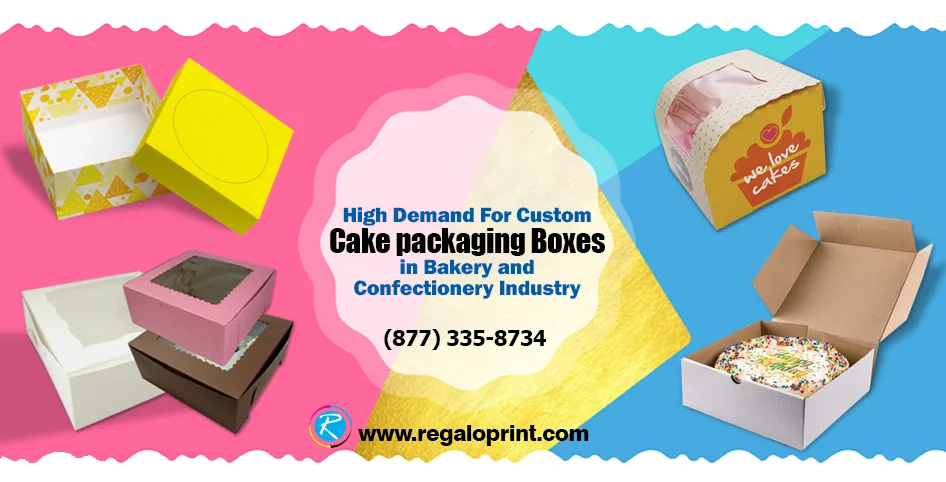
For a lot of bakery customers, the cake box is the last thing they see from the business before the cake itself gets cut, and often the first thing anyone else at the party sees, since it usually sits on a table for a while before the cake comes out of it. That's an unusually long and visible window for a piece of packaging to do its job, which is exactly why bakeries that used to treat the box as an afterthought are now treating it as part of the product.
Food-Safe Stock Is a Requirement, Not a Preference
Cake packaging sits in direct or near-direct contact with food, which puts it under a different standard than packaging for a candle or a T-shirt. The board has to be food-contact safe. Free of inks, coatings or adhesives that can transfer onto icing or exposed cake, and grease-resistant enough that a buttercream-heavy cake doesn't leave the box translucent and soft within an hour of pickup. This isn't a detail a bakery can retrofit after choosing a stock for its print quality; it has to be the starting filter before anything else about the box gets decided.
It also affects how the box can be printed. Ink and coating choices need to be compatible with food-safe board, which is part of why so much cake packaging leans on a clean, minimal exterior design rather than dense full-bleed graphics. It's not just an aesthetic choice, it's working within a narrower set of safe materials than non-food packaging allows.
The Case for a Window
A window cut into the top or side of a cake box solves a problem that's specific to baked goods: the product can look meaningfully different from how it was ordered, and the customer usually can't tell until the box is opened. A window removes that uncertainty at the point of pickup. The customer can confirm the cake matches what they expected without breaking the seal, lifting a lid, or risking a smudge to the frosting from handling the box more than necessary.

It also does something for the bakery that a closed box can't: it turns the box itself into a display case for however long it sits on a counter, a car seat, or a party table before it's opened. A well-designed window box effectively extends the bakery's storefront presentation into every location the cake travels to, at no cost beyond the box itself.
Structural Stability Isn't Just About Looks
A cake box has to hold real, sometimes significant weight without the base flexing or the sides bowing. A failure that a box for almost any other product doesn't have to worry about. Multi-tier wedding cakes need a base board rigid enough to support the full stack without sagging, corner locks or interlocking tabs that hold the structure square under load, and, for taller or heavier cakes, additional internal support like a cake drum or non-slip pad that keeps the cake from sliding during transport.
Getting the stock weight and construction right for the specific cake size matters more here than in most packaging categories, because the failure mode isn't cosmetic. It's a collapsed box and a ruined cake in the back of someone's car on the way to an event they can't reschedule. Bakeries ordering custom boxes need to specify for the heaviest cake that size of box will realistically carry, not just the average one.
Sizing for What a Bakery Actually Sells
Cake packaging isn't a one-size category, and bakeries generally need a small range of box specifications rather than a single default. A few common categories cover most of a bakery's range within our cake packaging line:
Matching the box specification to the actual product category, rather than trying to stretch one box size to cover everything from a single cupcake to a wedding cake, keeps both the cost and the presentation appropriate to what's inside.
Ordering Considerations Specific to a Bakery's Calendar
Bakeries run on a calendar that most other packaging buyers don't have to think about: predictable seasonal spikes around holidays, wedding season and graduation periods, layered on top of steady weekly demand. Custom box orders need to be placed with that calendar in mind, since a print run that takes a few weeks to produce has to land well before the seasonal spike it's meant to serve, not during it. A bakery caught short on boxes during its busiest week of the year is a far more painful problem than the same shortfall in a slower month.
It's also worth ordering across the box sizes a bakery actually uses rather than over-indexing on one. A wedding-heavy summer season draws down multi-tier stock fast, while the everyday single-tier and cupcake boxes need steadier, more frequent replenishment through the rest of the year. Planning reorders around that uneven demand curve, rather than treating all box sizes as needing the same reorder cadence, keeps a bakery from either running out of its most-used size or sitting on excess inventory of its least-used one.
The Box as a Marketing Surface
Cake boxes travel to birthday parties, weddings, offices and family gatherings. Locations the bakery itself never reaches directly. A printed exterior with the bakery's name, logo and colors turns every one of those deliveries into a small piece of local advertising, sitting in full view of a room full of people who are, by definition, in a celebratory mood and paying attention to the cake. For a business that depends heavily on word of mouth and repeat occasions (birthdays happen every year, weddings refer other weddings) that repeated exposure compounds in a way that's hard to replicate through paid advertising at a comparable cost.
It also feeds directly into how people already share these moments. A cake box opened at a party is a near-guaranteed photo moment, and a box that's part of that photo (rather than discarded before the picture is taken) extends the bakery's branding into every social share that moment generates, entirely organically.
Packaging That Matches the Product
Custom cake packaging works because it solves problems specific to what a bakery actually sells: fragile, food-contact, often expensive-to-remake products that need to arrive intact and looking exactly like what was promised. Food-safe stock, a window that builds trust before the box is even opened, and structural stability sized to the actual weight of the cake aren't optional upgrades so much as the baseline requirements for packaging that does its job. With the branding and marketing value arriving as a natural extension of getting those fundamentals right. Browse the wider packaging boxes range for structural options beyond cake-specific formats.


