Free design proof on every custom order: no templates, no stock SKUs
Twenty constructions, from a plain shipping carton to a rigid magnetic presentation box. Two questions settle most of it: how much the contents weigh, and whether the box is opened by a customer or by a warehouse. Filter by what the box has to do.

Self-locking roll end, E-flute. It ships direct and gets opened on camera.

Dieline drawn to your product. Nothing standard fits what you make.

Folding carton, tuck end, the default retail carton.

Carton built around shelf hierarchy. It competes for attention on a shelf.

Litho-laminated corrugated. Retail print quality plus impact resistance.

Lid and base, or collapsible rigid. It is opened as part of the occasion.

Shallow lid over a wide base, folded clothing and accessories.

Die-cut inserts, 1-4 bottles. Glass must never touch glass.

Solid recycled board, folded. Rigid protection without corrugated cost.

Locked flat base, tall clearance. The base has to carry weight, level.
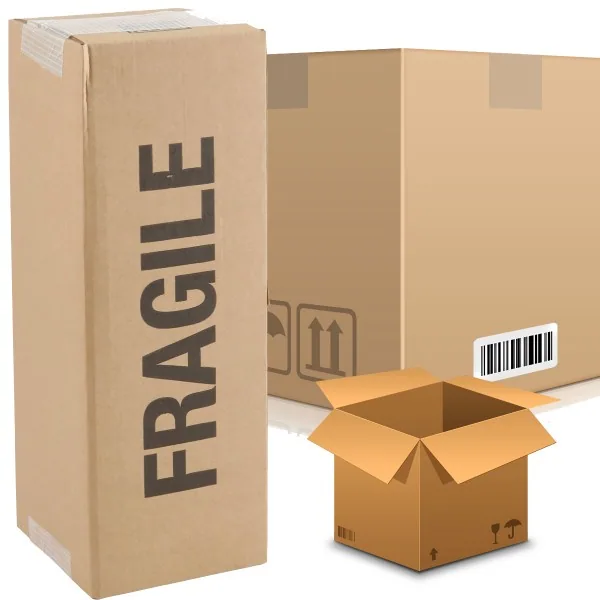
Slotted shipping carton: shipping, moving and bulk storage.

Fitted tray or sleeve per SKU: a range of small, awkward product shapes.

Peaked seam with die-cut handle. Someone carries it away by hand.

Uncoated kraft, low coverage. The material should read as unfussy.

Linen-embossed wrap over rigid: formal, textured, type-led packaging.

Rigid, hinged lid, concealed magnets. The closure itself has to feel expensive.

Square base folding to a point. It should not read as packaging.

Shallow carton, fitted interior. Media and printed matter, held apart.

Window patch, reinforced corners. The product has to be visible on shelf.

Rigid shell, strap pillow. The interior matters more than the outside.
Weight and journey first. A box that ships alone through a courier network needs corrugated, because the fluted middle layer is what absorbs a drop. Folding boxboard has no cushioning at all. A box that travels inside a shipping carton and only has to look right on a shelf can use a lighter board and put the difference into print and finish instead.
Then decide who opens it. A carton opened by a warehouse needs nothing inside. A box opened by a customer makes the inside of the lid the highest-value surface on the whole piece, and that costs very little at the point of ordering and cannot be added later. Where contents are fragile or oddly shaped, the insert does more work than the box: fitted trays and die-cut dividers are what stop things moving, not a snug outer.