Free design proof on every custom order: no templates, no stock SKUs

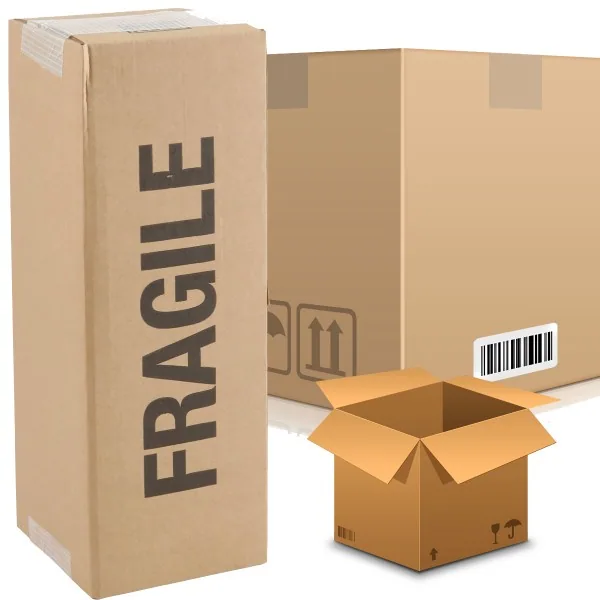
Corrugated boxes built to do double duty as protective packaging and retail-facing branding, with full-color graphics printed on litho-laminated stock and mounted to the corrugated board rather than printed directly on it. Die-cut into a shape that fits the product. A fitted tray, a custom sleeve, a shipper that doubles as a display box. They hold up to the bumps of shipping while still looking presentable when a customer opens the package or sees it on a shelf.
An estimator will reply within one business day.
A printed corrugated box sits in a different spot than a plain shipping carton: it still needs to survive freight handling, but it also has to look intentional when a customer opens it, since it often functions as the retail presentation, not just the transit layer. That combination is why corrugated packaging for e-commerce and retail typically uses litho-lamination. Full-color graphics printed on a separate sheet of coated paper, then glued to the face of the corrugated board. Rather than printing directly on the fluted material the way a plain utility shipper does. Litho-lamination holds fine detail, gradients and photography in a way that direct board printing can't, which matters when the box is part of the unboxing experience.
Die-cutting is where a lot of the design work happens on this style of box. Beyond the standard slotted-container shape, corrugated boxes can be cut into fitted trays that cradle a product in a specific position, sleeves that slide over an inner tray, or shippers with a perforated tear-strip that converts into a countertop display once opened. Useful for products that move from a shipping dock straight onto a retail shelf. The die line has to account for both the product's actual dimensions and how it will be removed, so a box that looks right flat sometimes needs adjustment once a sample is folded and tested with the real product inside.
Construction still follows standard corrugated principles underneath the printed surface. Flute size and wall count (single or double) set the crush resistance and cushioning, and those choices should be made based on product weight and how the box will be handled, not just its printed appearance. A beautifully printed box with the wrong flute for its contents still arrives damaged. It's worth requesting a physical sample or a 3D mock-up before a full print run, since litho-laminated graphics and die-cut structure both look different in a flat proof than they do assembled around the actual product.
Typical uses run from subscription boxes and direct-to-consumer shipments, where the box doubles as marketing the moment it's opened, to retail-ready packaging designed to go straight from the shipping case onto a store shelf. Either way, settling on the product's dimensions, weight and handling path before finalizing the die line keeps the box from needing a costly rework after the first production run.
The board is chosen against weight, not appearance. How much the box has to carry and how much abuse it takes on the way. Folding boxboard coated on one side takes the best print and suits anything retail-facing. Corrugated adds a fluted middle layer that absorbs impact, which is what makes it a shipping material. Rigid chipboard does not fold at all; it is cut, wrapped and assembled into a box that feels like an object rather than a carton.
How do I know which board I need? Tell us the weight of the contents and whether it ships alone or inside another carton. Those two facts eliminate most of the list immediately.
Most cartons run offset litho, which holds fine detail and small type far better than printing directly onto board. Corrugated is usually litho-laminated for the same reason. The graphics are printed on a thin sheet and bonded to the fluted board, rather than printed onto a ribbed surface that shows through. Where a brand color must match across every reorder, it runs as a Pantone spot rather than being approximated from process inks.
Should I print the inside? Only if the box is opened in front of the customer. On a shipper it is money spent where nobody looks.
A coating does two jobs on packaging: it protects the print from scuffing through the supply chain, and it sets the tactile impression when someone picks the box up. Gloss lamination maximizes color and wipes clean. Matte reads more restrained and hides handling marks. Soft-touch is a matte film with a velvety surface that changes how expensive a box feels more than any other single decision at this stage.
Is lamination necessary? On anything that travels, yes. Unlaminated board scuffs white at every corner and edge, and that is the first thing a customer sees.
A carton starts as a flat blank cut by a steel-rule die, with fold lines scored rather than merely creased so the board bends along a controlled path instead of cracking its coating. The glue is applied to the side seam and the box is delivered flat, folded on that one seam. Everything about how the finished box behaves (whether it locks square, whether the lid sits flush) is decided by the accuracy of the die and the score positions.
Why does my box arrive flat? It ships flat and folds up at your end. A fraction of the freight cost and storage space of a pre-assembled box, which is why almost all cartons are supplied this way.
Graphics are printed offset onto a thin liner sheet and then bonded to the fluted corrugated board, rather than printed directly onto a ribbed surface. That is what allows a box to carry photographic, retail-quality artwork and still have the impact resistance of corrugated. The two things a shipper that doubles as shelf packaging has to do at once.
Why not print straight onto the corrugated? Direct printing on flute shows the ribbing through the ink and cannot hold fine detail. Litho lamination costs more and is the only way to get true retail print quality on corrugated.
Ask for samples of any board on this list before committing to a run. Stiffness and surface are impossible to judge on screen.
A bonded film that carries the box through the supply chain without scuffing white at the corners. Gloss holds color saturation; matte reads more restrained and hides handling marks across a long shelf life.
A matte film with a velvety surface that changes how expensive a box feels more than any other single decision. It marks more readily than gloss, so it suits a box that is opened once rather than handled daily.
Metallic foil pressed into the board under heat. On packaging it works hardest on a logo or a single rule rather than across large areas. A small foil element against an uncoated or matte ground reads as considered.
A raised gloss varnish on selected elements, or the board physically pressed into relief. Both add a tactile layer that survives being seen only once, which on packaging is often the only moment that matters.
Same family, genuinely different jobs. Your current selection is highlighted.
| Box | From | Construction | Order it when |
|---|---|---|---|
| Custom Packaging Box | $185 | Dieline drawn to your product | Nothing standard fits what you make |
| Tuck Box | $210 | Folding carton, tuck end | The default retail carton |
| Mailer Box | $220 | Self-locking roll end, E-flute | It ships direct and gets opened on camera |
| Retail Box | $225 | Carton built around shelf hierarchy | It competes for attention on a shelf |
| Corrugated Boxes | $385 | Litho-laminated corrugated | Retail print quality plus impact resistance |
| Cardboard Packaging | $378 | Slotted shipping carton | Shipping, moving and bulk storage |
| Kraft Box | $210 | Uncoated kraft, low coverage | The material should read as unfussy |
| Bux Board Box | $235 | Solid recycled board, folded | Rigid protection without corrugated cost |
| Gift Boxes | $185 | Lid and base, or collapsible rigid | It is opened as part of the occasion |
| Magnetic Box | $325 | Rigid, hinged lid, concealed magnets | The closure itself has to feel expensive |
| Linen Card Box | $320 | Linen-embossed wrap over rigid | Formal, textured, type-led packaging |
| Apparel Box | $280 | Shallow lid over a wide base | Folded clothing and accessories |
| Watch Box | $305 | Rigid shell, strap pillow | The interior matters more than the outside |
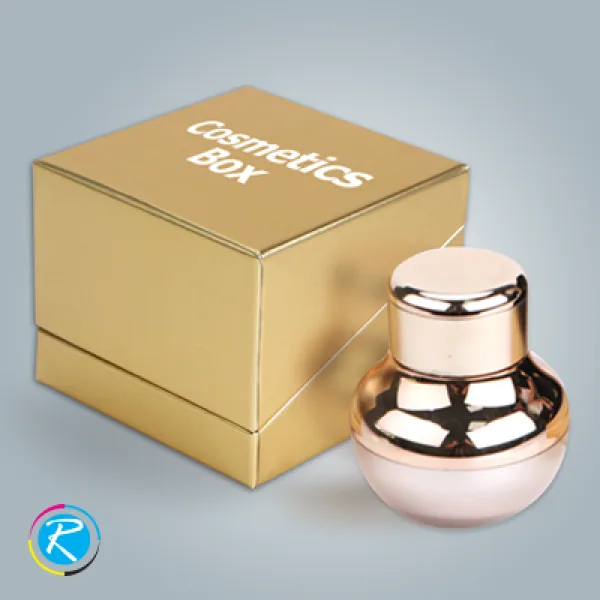
| Cosmetic Packaging | $210 | Fitted tray or sleeve per SKU | A range of small, awkward product shapes |
| Bottle Packaging | $870 | Die-cut inserts, 1-4 bottles | Glass must never touch glass |
| Cake Packaging | $424 | Locked flat base, tall clearance | The base has to carry weight, level |
| Gable Box | $185 | Peaked seam with die-cut handle | Someone carries it away by hand |
| Pyramid Box | $275 | Square base folding to a point | It should not read as packaging |
| Toy Box | $235 | Window patch, reinforced corners | The product has to be visible on shelf |
| Software Boxes | $320 | Shallow carton, fitted interior | Media and printed matter, held apart |
Direct printing on flute shows the ribbing through the ink and cannot hold fine detail or small type. Litho lamination (printing on a liner and bonding it to the board) costs more and is the only route to true retail print quality on corrugated.
E-flute for retail-facing boxes where print quality and a thinner wall matter. B or C flute where the load is heavier and crush resistance matters more than surface. The contents weight decides it.
That is exactly what this construction is for. Say so up front, because a box doing both jobs needs its graphics planned around where the tear strip or opening feature goes.
The board is. A laminated print layer complicates the stream compared to plain kraft, so if recyclability is a stated brand commitment, raise it early and we will look at the coating options.
Pricing for corrugated boxes starts at $385 and moves with quantity, size, material and finish rather than sitting on a fixed list. Setup is shared across the run, so the per-unit price drops steeply as the quantity rises: the gap between a few hundred and a few thousand is usually the significant one. Send the size, quantity and what it has to do and you get a firm figure back, not a range.
There is a practical minimum rather than a hard one. Every run carries artwork checks, a proof and a press setup, so a very small quantity of corrugated boxes prices poorly per unit even though we will still make it. If you are ordering a small batch, ask for pricing at two or three quantities at once: the curve usually shows that a modest increase costs very little more in total.
The clock starts when you approve the proof, not when the order is placed, which is the part most people are surprised by. You get a proof first: a flat proof showing artwork against the dieline, plus a folded mockup so you can see the panel that actually faces the customer. Nothing is tooled until you approve it, because a steel-rule die is the one thing in this process that cannot be revised cheaply. Turnaround after approval depends on the finish: anything laminated, foiled or die-cut adds a stage that cannot be compressed without causing problems later. Tell us the date you actually need them and we will work backwards from it rather than quoting a generic lead time.
Print-ready artwork with bleed and a safe margin, supplied as a PDF, AI or EPS. Photographic elements should be supplied at the resolution the finished size needs, not the resolution that looks sharp on screen. If your file is not print-ready, say so when you order. We would rather fix it before the proof than after the run.
Yes. Litho-laminated corrugated is the standard build, and the dimensions around it are yours to set. A size that sits efficiently on the press sheet often costs no more than a standard one, while an awkward proportion that wastes half the sheet does. Ask before you commit and we will tell you whether a small change to the dimensions saves a disproportionate amount.
In most cases they are the same product under a different name: the trade uses several terms for it depending on the region and the supplier. What actually defines this one is the build: litho-laminated corrugated. Order it when retail print quality plus impact resistance. If you have seen it called printed corrugated boxes elsewhere, describe what it has to do rather than which name you found, and we will match the specification.
Yes. We provide free samples, and on corrugated boxes it is worth asking for one, because the difference between folding boxboard (c1s) and kraft board is obvious in the hand and invisible on a screen. Most orders run on folding boxboard (c1s), but ask for whichever you are weighing up. You also get a free design proof before anything goes to press, so nothing is printed that you have not seen.
The usual choices are lamination, soft-touch, foil stamping. Finish is not decoration on this product so much as a decision about how long it survives and how it reads in the hand, so it is worth choosing against the job rather than the budget. Tell us where the finished piece ends up and we will say which finish is doing real work and which is only adding cost.
Yes, and that is what almost every order here is. Nothing in this catalogue is a stock item: corrugated boxes are manufactured to the specification you give us, with your artwork on them. Send your logo as vector artwork where you have it, since that scales to any size without softening. If all you have is a low-resolution file, tell us and we will say what it needs before it reaches the press.
Yes, and a repeat run is simpler than the first one. We keep your approved specification on file, so a reorder skips the setup decisions and goes straight to production. If nothing about the artwork or the specification has changed, there is nothing to re-approve. Tell us the previous order and we will match it rather than starting the specification again.
Yes. Regalo Print has been producing custom commercial print for businesses across the USA and Canada since 2008, and every order ships tracked. The tracking number reaches you the day the job leaves, not the day it arrives. If you are working to a fixed date, say so when you order so the production schedule is built around the delivery date rather than the other way round.