Free design proof on every custom order: no templates, no stock SKUs
Large-format graphics for walls, fences, glass and vehicles. Banners, decals and window clings. Everything here is read from further away than any other printed piece, which makes reading distance the first design constraint rather than an afterthought. Filter by where the graphic is going.
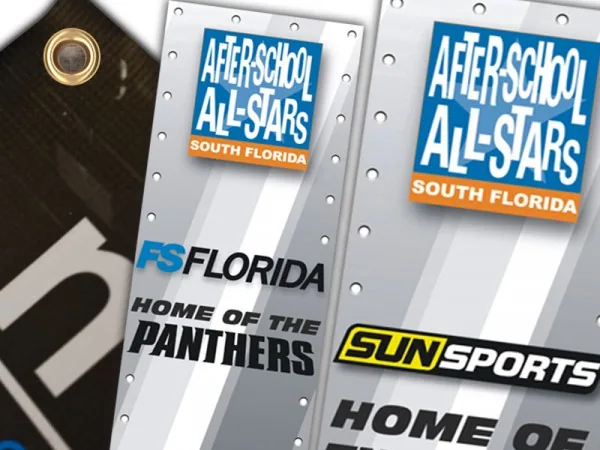
Solid scrim, hemmed and grommeted, the standard outdoor banner.
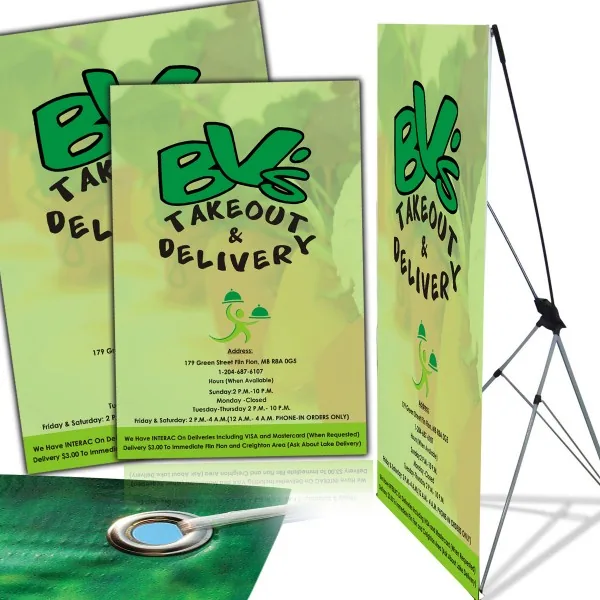
Your size, material and mounting. The space does not fit a standard.

Perforated, wind passes through: fences, scaffolding and exposed sites.
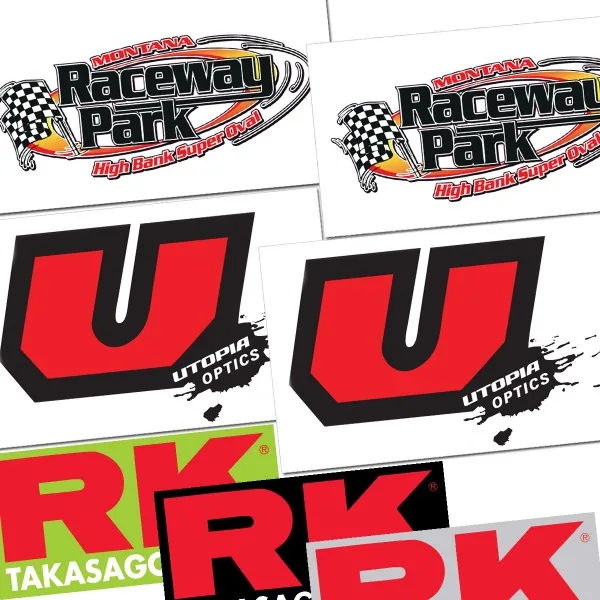
Printed adhesive vinyl, the general-purpose outdoor decal.

Clear or white vinyl for glass. It is read through a window.

One face, no adhesive. It changes seasonally and must come off clean.

Cut vinyl for panels and glass. It has to survive car washes and highway grit.

Your size, shape and quantity, nothing standard fits the job.

Cut to the artwork outline, no background shape around the logo.

Solid color vinyl, plotter cut, type and logos with no background.

Printed both faces. It must read from inside and outside.

Printed on both faces. It is read from both sides of the glass.

UV laminate over outdoor vinyl. It faces months of sun and rain.

Oval cut. A wordmark wider than it is tall.

Windshield or window permit, an attendant checks it at a glance.

Square cut, most efficient, maximum layout area per sheet.

Circular cut, a seal or badge with no top or bottom.

Equal width and height, qR codes and grid-based layouts.

Adhesive backed, no hardware: glass, walls and stage fronts.
Decide the reading distance first and let it set the type size, because a banner carrying three lines of small text is a banner nobody reads. Then think about wind, which is what actually destroys large-format work. A solid banner on a fence or scaffold acts as a sail and will either tear or pull its fixings out, that is precisely why mesh exists, and the small loss of color density is worth it against a banner that stays up.
On glass the choice is about which side you can reach. Applied inside, a graphic is protected from weather and from anyone picking at it from the street, and it lasts considerably longer, but the artwork has to be reverse-printed to read correctly through the pane. Static clings use no adhesive at all, so they peel off in seconds and store flat for next season, which makes them the right answer for anything that changes.