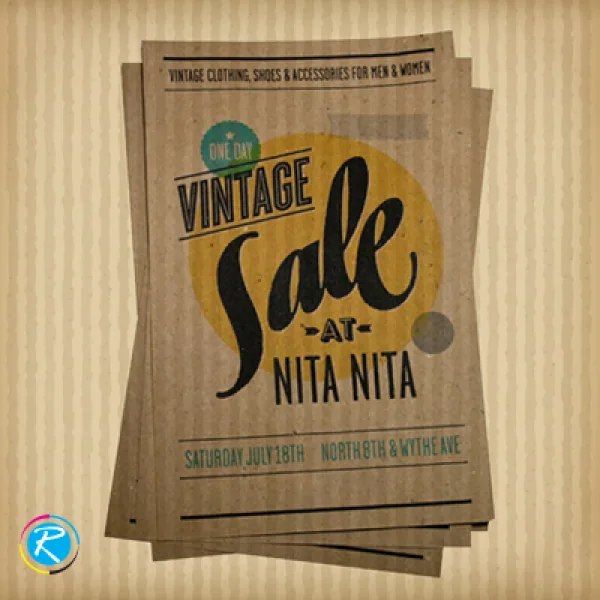
Free design proof on every custom order: no templates, no stock SKUs

Invitations for fundraisers, rallies, town halls and campaign events, produced on the fast turnaround a campaign calendar actually runs on. Consistent with campaign colors and branding, in the volume an event list requires.
An estimator will reply within one business day.
Campaign events run on a tighter and less predictable schedule than most print categories. A fundraiser or town hall can be confirmed with only a couple of weeks' notice, and the invitation has to be in mailboxes well before that. Turnaround reliability matters here more than almost any other spec, since a late invitation is functionally a missed event.
Consistency with the broader campaign identity (color, typeface, logo treatment) matters more than novelty. An invitation that doesn't visually match the yard signs, mailers and campaign website reads as off-brand at exactly the moment consistency builds trust. Standard card stock with strong, accurate color reproduction usually outperforms an elaborate finish that draws attention to itself.
Volume swings widely by event type: a small-dollar fundraiser might need a few dozen, a general town hall invitation could run into the thousands. Print economics favor batching where possible. Printing a standing invitation template with a variable date/venue field, rather than a fully custom design for every single event, keeps unit cost down across a campaign season.
Event date (and how firm it is), expected volume, and existing campaign brand assets (colors, logo files) speed up both the quote and the turnaround. For a series of events across a campaign, a locked base template makes each subsequent order faster to reorder.
An invitation is judged in the hand before it is read, and weight is most of that judgment. Anything below about 250gsm reads as a flyer no matter what is printed on it. From 300gsm upward the card has a stiffness that registers as an occasion. Textured and cotton stocks add a second signal (a surface that is visibly not office paper) which is why they persist for formal invitations despite costing more.
How heavy is heavy enough? 300gsm is where a card stops flexing when held at one corner. That single physical test is what most people are unconsciously performing.
Full-color digital and offset cover the majority of invitations and handle photographs and color without difficulty. Two traditional methods do something printing cannot: letterpress presses the type physically into a soft stock so you can feel the impression, and foil lays metal onto the surface. Both are chosen for texture rather than for color, and both work best with restrained type-led designs.
Is letterpress worth it? On a soft cotton stock with type-led artwork, it is the most tactile option available. On a coated stock with a photograph, it does nothing you can feel.
The edge is the one surface most invitations ignore and the one guests handle constantly. A deckle edge (torn rather than cut) reads as traditional and handmade. A painted edge in a contrasting color is contemporary and unmissable. Rounded corners soften the whole card and survive handling better. None of these change what the invitation says; all of them change how it feels to hold.
Which edge suits a formal invitation? Deckle for traditional, painted for contemporary, clean cut when the type is doing all the work already.
The envelope is the first thing the recipient sees, so it is part of the invitation rather than packaging for it. A matched or lined envelope signals the contents before it is opened, which is the whole reason invitations survive in an era of email. Enclosures (a reply card, a details card, a map) are ordered with the main card so stock and finish match across the set.
Should I order envelopes with the invitations? Yes. Matching them afterwards is difficult and the mismatch is obvious. Order the set together.
Campaign events are scheduled and rescheduled at short notice, so the binding constraint is almost always time rather than specification. These run on formats that print and finish quickly, with artwork built to accept late changes to a date, a venue or a speaker. Any authorisation or disclaimer wording your jurisdiction requires has to be on the artwork before it reaches us.
Do you handle the required disclaimers? No. We print what you supply. Requirements vary by jurisdiction and election, so have the wording confirmed before artwork is finalised.
Ask for samples before committing. An invitation is judged by weight and surface in the hand, and neither survives a screen.
Metal pressed into the stock under heat. On an invitation it works hardest on a name, a date or a monogram rather than across an area. A single foil element against uncoated stock is the most reliable formal treatment there is.
Type pressed physically into a soft stock, leaving an impression you can feel with a fingertip. It needs a thick, soft sheet to bite into and type-led artwork to be worth it; on coated card it does almost nothing.
The card raised or recessed into relief with no ink at all. Blind embossing is the quietest premium finish available, which is exactly why it suits occasions where restraint is the tone.
Deckle edges, painted edges, rounded corners. The edge is handled constantly and noticed unconsciously, and it is the cheapest place to make a standard rectangle feel considered.
Same family, genuinely different jobs. Your current selection is highlighted.
| Invitation | From | Character | Order it when |
|---|---|---|---|
| Wedding Invitations | $160 | A suite (card, reply, details) | Several pieces must match exactly |
| Business Invitations | $170 | Heavy stock, restrained finish | Guests must read the formality correctly |
| Religious Invitations | $160 | Textured stock, minimal palette | Tone matters more than detail |
| Birthday Invitations | $170 | Distinct stock and finish | It has to survive the post-sorting glance |
| Party Invitations | $160 | Flat, folded or shaped | The format should suit the party |
| Political Invitations | $160 | Fast turnaround, late changes | The date may move before it prints |
Yes. These run on formats chosen for speed, and the artwork is built to accept late changes. Tell us the date the event happens, not the date you would like them, and we will work backwards from it.
No. We print exactly what you supply. Disclaimer and authorisation requirements vary by jurisdiction and by election, and they change. Have the wording confirmed by someone qualified before artwork is finalised.
It is the most common problem on campaign work. Where a change is plausible, keep the volatile details on a separate insert or a web reference rather than on the main card, so a change costs one small reprint instead of the whole run.
Heavier than a rally handout. A fundraiser invitation is asking for money and the card should look like the event is worth attending. For rallies and town halls, a lighter stock at higher volume is the right trade.
Pricing for political invitations starts at $160 and moves with quantity, size, material and finish rather than sitting on a fixed list. Setup is shared across the run, so the per-unit price drops steeply as the quantity rises: the gap between a few hundred and a few thousand is usually the significant one. Send the size, quantity and what it has to do and you get a firm figure back, not a range.
There is a practical minimum rather than a hard one. Every run carries artwork checks, a proof and a press setup, so a very small quantity of political invitations prices poorly per unit even though we will still make it. If you are ordering a small batch, ask for pricing at two or three quantities at once: the curve usually shows that a modest increase costs very little more in total.
Print-ready artwork with bleed and a safe margin, supplied as a PDF, AI or EPS. Photographic elements should be supplied at the resolution the finished size needs, not the resolution that looks sharp on screen. If your file is not print-ready, say so when you order. We would rather fix it before the proof than after the run.
Yes. Campaign turnaround is the standard build, and the dimensions around it are yours to set. A size that sits efficiently on the press sheet often costs no more than a standard one, while an awkward proportion that wastes half the sheet does. Ask before you commit and we will tell you whether a small change to the dimensions saves a disproportionate amount.
In most cases they are the same product under a different name: the trade uses several terms for it depending on the region and the supplier. What actually defines this one is the build: fast turnaround, late changes. Order it when the date may move before it prints. If you have seen it called political invitations printing elsewhere, describe what it has to do rather than which name you found, and we will match the specification.
Yes. We provide free samples, and on political invitations it is worth asking for one, because the difference between smooth card and smooth card, heavy is obvious in the hand and invisible on a screen. Most orders run on smooth card, heavy, but ask for whichever you are weighing up. You also get a free design proof before anything goes to press, so nothing is printed that you have not seen.
The usual choices are foil stamping, letterpress, emboss and deboss. Finish is not decoration on this product so much as a decision about how long it survives and how it reads in the hand, so it is worth choosing against the job rather than the budget. Tell us where the finished piece ends up and we will say which finish is doing real work and which is only adding cost.
Yes, and that is what almost every order here is. Nothing in this catalogue is a stock item: political invitations are manufactured to the specification you give us, with your artwork on them. Send your logo as vector artwork where you have it, since that scales to any size without softening. If all you have is a low-resolution file, tell us and we will say what it needs before it reaches the press.
Yes, and a repeat run is simpler than the first one. We keep your approved specification on file, so a reorder skips the setup decisions and goes straight to production. If nothing about the artwork or the specification has changed, there is nothing to re-approve. Tell us the previous order and we will match it rather than starting the specification again.
Yes. Regalo Print has been producing custom commercial print for businesses across the USA and Canada since 2008, and every order ships tracked. The tracking number reaches you the day the job leaves, not the day it arrives. If you are working to a fixed date, say so when you order so the production schedule is built around the delivery date rather than the other way round.