

Envelope size seems like the kind of decision that shouldn't need a guide. Until an office orders the wrong one and ends up folding documents that were never meant to be folded, or discovers a self-adhesive seal that doesn't hold in a humid mailroom. A 9 x 12 window envelope with self-adhesive tape solves a specific, common mailing problem: sending a full, unfolded letter-size document quickly and reliably, without licking a flap or hand-addressing every piece.
Why 9 x 12 Specifically
A standard letter-size sheet is 8.5 x 11 inches. A 9 x 12 envelope is sized to hold that sheet completely flat, with enough margin that the paper isn't jammed edge-to-edge against the envelope walls. That half-inch of clearance on each dimension matters more than it sounds like. It's the difference between a document that slides in and out cleanly and one that has to be forced, creasing corners or catching on the flap in the process.
The alternative is folding the document down to fit a smaller envelope, which is fine for a personal letter but a real problem for anything with a signature line, a logo, a table, or multiple pages meant to be read together. A fold across the middle of a contract signature block or a formatted invoice looks unprofessional at best and can obscure content at worst. Sizing up to 9 x 12 removes that trade-off entirely: whatever fits on a standard printed page goes in flat, exactly as it was designed to be read.
It's worth distinguishing this from the sizes on either side of it. A 10 x 13 envelope holds the same flat letter sheet with more room to spare, useful when the mailing includes a few loose enclosures or slightly bulkier contents; a #10 business envelope, the everyday size for a folded one-page letter, is built around a tri-fold sheet and isn't a substitute once the goal is sending something flat. 9 x 12 sits at the size that matches a single flat letter-size document specifically: sized for the paper, not oversized for extra contents it isn't carrying.
Self-Adhesive Tape vs. a Gummed Flap
Traditional envelope flaps use a gummed adhesive that has to be moistened (licked, or run across a sponge or moistener) before it seals. That works fine for occasional use, but it's slow and inconsistent at any real mailing volume, and gum adhesive is genuinely sensitive to humidity: too dry and it won't tack properly, too humid and flaps can seal prematurely in storage.
Self-adhesive tape solves both problems at once. A peel-off strip covers the adhesive until the envelope is ready to be sealed; removing the strip and pressing the flap down creates an immediate, reliable seal with no moisture involved at all. For an office processing dozens or hundreds of mailings, that difference compounds fast. There's no moistening step to slow down an assembly line of stuffing and sealing, and the seal quality doesn't vary with the weather the way a gummed flap can. It's a small mechanical change with an outsized effect on how fast a mail run actually gets done.
Getting the Window Placement Right
A window envelope only works if the window lines up with where the address actually sits on the document going inside it, which sounds obvious until a business orders a stock window size that doesn't match its own letterhead or invoice template. The address block on most standard business documents sits in a fairly predictable zone, but "fairly predictable" isn't the same as guaranteed, especially once a company's letterhead, invoice layout or contract template has its own header height and margins.
The practical fix is checking window placement against the actual document template before ordering in volume. Printing a sample page, inserting it as it would sit in the envelope, and confirming the recipient's address is fully visible with enough margin that postal barcoding and stamps or metering aren't obstructed. Getting this checked against a real document once, before a full print run, avoids the far more expensive problem of a completed batch of envelopes where the address window cuts off half of every mailing label.
Stock Weight and Opacity Matter More Than They Seem
Envelope paper is measured in pound weight, and the difference between a light and a heavy stock shows up in two practical ways: how the envelope handles in a printer or inserting machine, and how much of what's inside is visible through the paper. A lighter stock, often in the 24-pound range, is fine for routine internal mail but can let dark print or a signature bleed through faintly under bright light. Not ideal for anything containing sensitive figures, contract terms or account information. A heavier stock, generally 28 pounds and up, holds its shape better through automated handling and gives genuine privacy to what's inside, which is why most invoice, billing and legal mailings default to it rather than the lightest option available.
The stock choice also affects how reliably the self-adhesive seal performs. A heavier envelope holds its fold better through transit, which keeps the sealed flap under even pressure rather than working loose at the corners. A small detail, but one that matters over the life of a mailing that might sit in a truck or a mailbox for a day or more before it's opened.
Ordering in Volume
Custom printed 9 x 12 envelopes are ordered in batches, and getting the specification locked in before a print run starts matters more here than with most stationery, since a batch of a few thousand envelopes with a misaligned window or the wrong return address is a genuinely expensive mistake to discover after the fact. Requesting a printed sample before committing to the full run is a small step that catches window alignment, color accuracy and print placement issues while they're still cheap to fix.
Reorder timing is worth planning around actual mailing volume rather than guessing. An office running a predictable monthly billing cycle can forecast envelope usage fairly precisely and order accordingly; a business with more variable mailing needs is generally better served keeping a reasonable buffer stock on hand, since custom print runs take real production time and an unexpected shortfall mid-mailing-cycle isn't something that gets solved same-day.
Where This Size Actually Gets Used
9 x 12 window envelopes with self-adhesive tape show up wherever a business needs to mail a complete, unfolded document at real volume: invoices and statements sent on a billing cycle, signed contracts and agreements where a fold across a signature isn't acceptable, tax and legal documents, and printed catalogs or presentation sets that need to arrive flat rather than creased. What connects all of these is the same underlying requirement. The recipient needs to receive exactly what was printed, without a fold changing how it reads, and the sender needs to seal and send it fast enough that packaging doesn't become the bottleneck in getting it out the door.
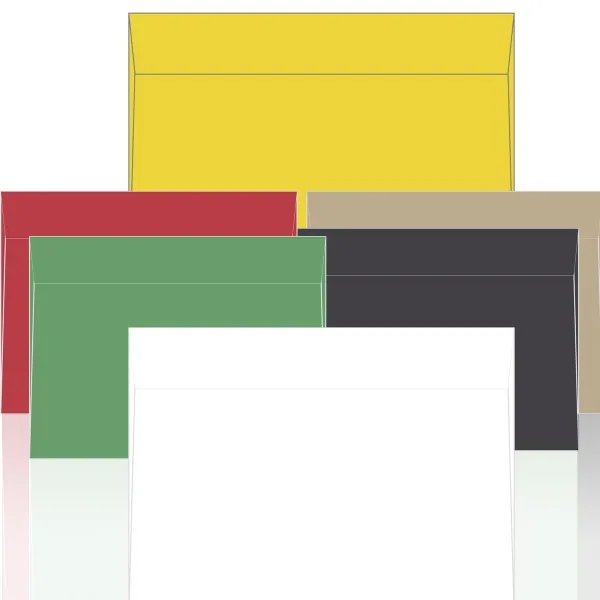
Custom printing the exterior (a return address, logo or accent color) adds a professional finish on top of the functional case, but the size and seal choice are the two decisions that actually determine whether the envelope does its job. Get the size right and documents go in flat; get the tape right and sealing stops being the slow step in an otherwise fast mailing process. Browse our full envelopes range for other sizes and stock weights.


